A Gut Renovated MidCentury Modern Green Energy Home for Luxury Winter Living for $4.65m

A Gut Renovated MidCentury Modern Green Energy Home for Luxury Winter Living for $4.65m

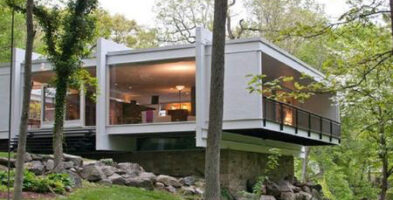
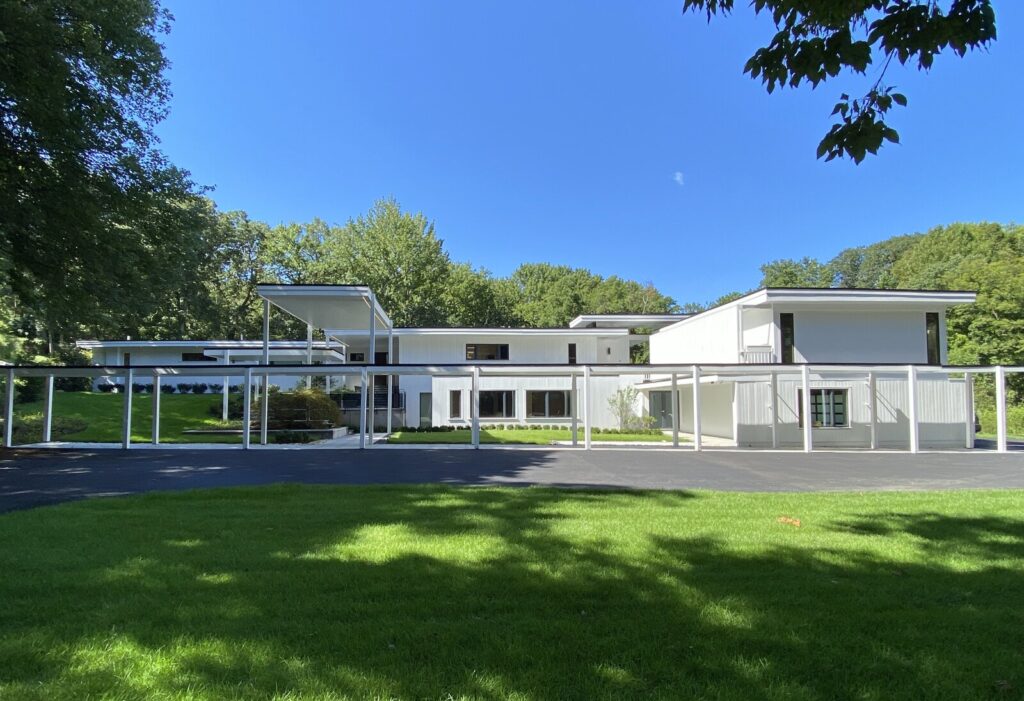
A Mid Century Custom Renovated Treasure with additions designed by Paul Rudolph with custom finishes of the finest caliber throughout. Gut renovated with all new systems (plumbing, electric, HVAC, AV, internet, floors, walls, windows, outdoor and indoor kitchens, baths, indoor and outdoor pools, landscaping, roofs, decks) completed 2020, on the market for an asking price of $4.649 million.

This 10,000+ Sqft complex includes the main residence, separate apt or office, a Paul Rudolph original guest house. A rare and priceless offering perfect for sheltering in place with indoor and outdoor swimming pools, wet/dry sauna, media room, gym, multiple workspaces.

A 1000+ Sqft screened-in outdoor covered porch with an entertaining outdoor kitchen overlooking the outdoor pool,

Imagine living in this luxury house sited on a unique 2.48 private landscape in Larchmont this is a truly unique mid-century modern green home retreat. A perfect shelter-in-place home with easy access to NYC.

Multi-zone radiant heating and cooling, which creates an ambient temperature throughout the house with 7 zone controls. A pleasant warm feeling on your feet and no hot or cold spots.

Central Humidity control – the humidity levels in the house are controlled by a central humidity control system. It pumps humid air, to avoid excessive dryness in winter, and dehumidifies the house, when the weather is humid.

An indoor pool and jacuzzi – where the entire family can enjoy the snowy weather outlooking the window walls, with a warm pool day across a dual-sided gas fireplace.

A wet-dry sauna and indoor gym – to warm you up and keep you going through the cold days

A master bath, with digital temperature controls and a steam shower.

A 21 jet jacuzzi tub in the master bath for privacy.

Heated toilet seats and heated bidets throughout all bathrooms in the house.

Walls of windows, and skylights for amazing natural sunshine through the dark days of winter.

And, if you think this is going to run up a huge energy bill, it’s a “zero” energy house with geothermal and solar systems, with a 45KW whole house generator backup, for when the snowstorm knocks your power out. Luxury at its finest.

Visit website at 862Fenimore.com

For additional architectural photography:

– Exterior –
www.862fenimore.com/est…

– Interior –
www.862fenimore.com/est…

– Interior –
www.862fenimore.com/est…Betty McDowell 

uploaded A Gut Renovated MidCentury Modern Green Energy Home for Luxury Winter Living for $4.65m through Add A Home.Add your own project for the chance to be featured in Editor’s Picks.

Modern home with Exterior, Flat RoofLine, House Building Type, Shingles Roof Material, and Wood Siding Material. Front Photo  of A Gut Renovated MidCentury Modern Green Energy Home for Luxury Winter Living for $4.65m

Photo Courtesy of Betty McDowellPhoto Categories:exteriorflat rooflinehouse building typeshingles roof materialwood siding material

Front

Modern home with Bedroom and Ceiling Lighting. Master Bedroom Photo 2 of A Gut Renovated MidCentury Modern Green Energy Home for Luxury Winter Living for $4.65m

Photo Courtesy of Betty McDowellPhoto Categories:bedroomceiling lighting

Master Bedroom

Modern home with Exterior, Wood Siding Material, Flat RoofLine, and House Building Type. Entrance and canopies Photo 3 of A Gut Renovated MidCentury Modern Green Energy Home for Luxury Winter Living for $4.65m

Photo: Paul Rudolph Heritage FoundationPhoto Categories:exteriorwood siding materialflat rooflinehouse building type

Entrance and canopies

Modern home with Exterior, House Building Type, Wood Siding Material, and Flat RoofLine. Paul Rudolph designed canopies Photo 4 of A Gut Renovated MidCentury Modern Green Energy Home for Luxury Winter Living for $4.65m

Photo: Paul Rudolph Heritage FoundationPhoto Categories:exteriorhouse building typewood siding materialflat roofline

Paul Rudolph designed canopies

Modern home with Exterior, House Building Type, Flat RoofLine, and Wood Siding Material. Lower level entrance Photo 5 of A Gut Renovated MidCentury Modern Green Energy Home for Luxury Winter Living for $4.65m

Photo: Paul Rudolph Heritage FoundationPhoto Categories:exteriorhouse building typeflat rooflinewood siding material

Lower level entrance

Modern home with Outdoor, Large Pools, Tubs, Shower, and Trees. Outdoor Pool and Backyard  Photo 6 of A Gut Renovated MidCentury Modern Green Energy Home for Luxury Winter Living for $4.65m

Photo Courtesy of Betty McDowellPhoto Categories:outdoorlarge pools, tubs, showerstrees

Outdoor Pool and Backyard

Modern home with Exterior, House Building Type, Wood Siding Material, and Flat RoofLine. Exterior from the side Photo 7 of A Gut Renovated MidCentury Modern Green Energy Home for Luxury Winter Living for $4.65m

Photo: Paul Rudolph Heritage FoundationPhoto Categories:exteriorhouse building typewood siding materialflat roofline

Exterior from the side

Modern home with Dining Room, Two-Sided Fireplace, Ceiling Lighting, Gas Burning Fireplace, and Recessed Lighting. Dining Room overlooking leveled living area Photo 8 of A Gut Renovated MidCentury Modern Green Energy Home for Luxury Winter Living for $4.65m

Photo Courtesy of Betty McDowellPhoto Categories:dining roomtwo-sided fireplaceceiling lightinggas burning fireplacerecessed lighting

Dining Room overlooking leveled living area

Modern home with Exterior, Flat RoofLine, House Building Type, and Wood Siding Material. Canopies from the side Photo 9 of A Gut Renovated MidCentury Modern Green Energy Home for Luxury Winter Living for $4.65m

Photo: Paul Rudolph Heritage FoundationPhoto Categories:exteriorflat rooflinehouse building typewood siding material

Canopies from the side

Modern home with Living Room, Ceiling Lighting, Two-Sided Fireplace, and Gas Burning Fireplace. Living room  Photo 10 of A Gut Renovated MidCentury Modern Green Energy Home for Luxury Winter Living for $4.65m

Photo Courtesy of Betty McDowellPhoto Categories:living roomceiling lightingtwo-sided fireplacegas burning fireplace

Living room

Modern home with Living Room, Ceiling Lighting, Gas Burning Fireplace, Two-Sided Fireplace, and Light Hardwood Floor. Leveled living area  Photo 11 of A Gut Renovated MidCentury Modern Green Energy Home for Luxury Winter Living for $4.65m

Photo: Paul Rudolph Heritage FoundationPhoto Categories:living roomceiling lightinggas burning fireplacetwo-sided fireplacelight hardwood floors

Leveled living area

Modern home with Outdoor and Large Patio, Porch, Deck. Screened Porch with full kitchen overlooking backyard and outdoor pool Photo 12 of A Gut Renovated MidCentury Modern Green Energy Home for Luxury Winter Living for $4.65m

Photo Courtesy of Betty McDowellPhoto Categories:outdoorlarge patio, porch, deck

Screened Porch with full kitchen overlooking backyard and outdoor pool

Modern home with Living Room, Ceiling Lighting, Recessed Lighting, Floor Lighting, and Accent Lighting. Indoor Pool with Jacuzzi Photo 13 of A Gut Renovated MidCentury Modern Green Energy Home for Luxury Winter Living for $4.65m

Photo: Paul Rudolph Heritage FoundationPhoto Categories:living roomceiling lightingrecessed lightingfloor lightingaccent lighting

Indoor Pool with Jacuzzi

Modern home with Living Room and Ceiling Lighting. Sunroom overlooking Indoor Pool Photo 14 of A Gut Renovated MidCentury Modern Green Energy Home for Luxury Winter Living for $4.65m

Photo Courtesy of Betty McDowellPhoto Categories:living roomceiling lighting

Sunroom overlooking Indoor Pool

Modern home with Kitchen, Refrigerator, Granite Counter, Ceiling Lighting, and Cooktops. Kitchen with Skylight  Photo 15 of A Gut Renovated MidCentury Modern Green Energy Home for Luxury Winter Living for $4.65m

Photo Courtesy of Betty McDowellPhoto Categories:kitchenrefrigeratorgranite countersceiling lightingcooktops

Kitchen with Skylight

Original source can be read from: Dwell
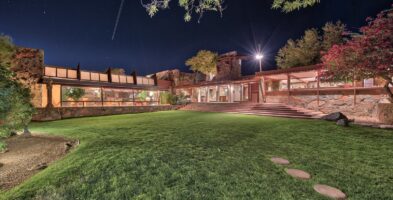
Frank Lloyd Wright’s School of Architecture Is Closing After 88 Years

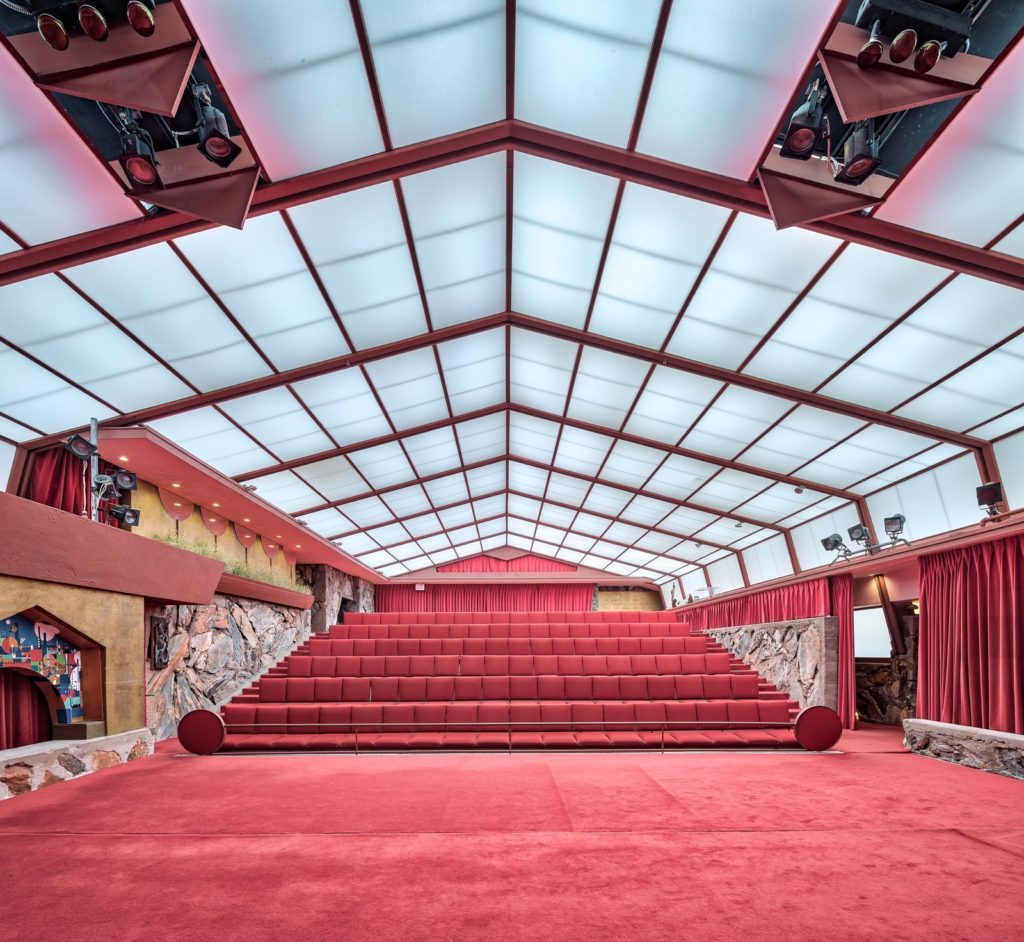
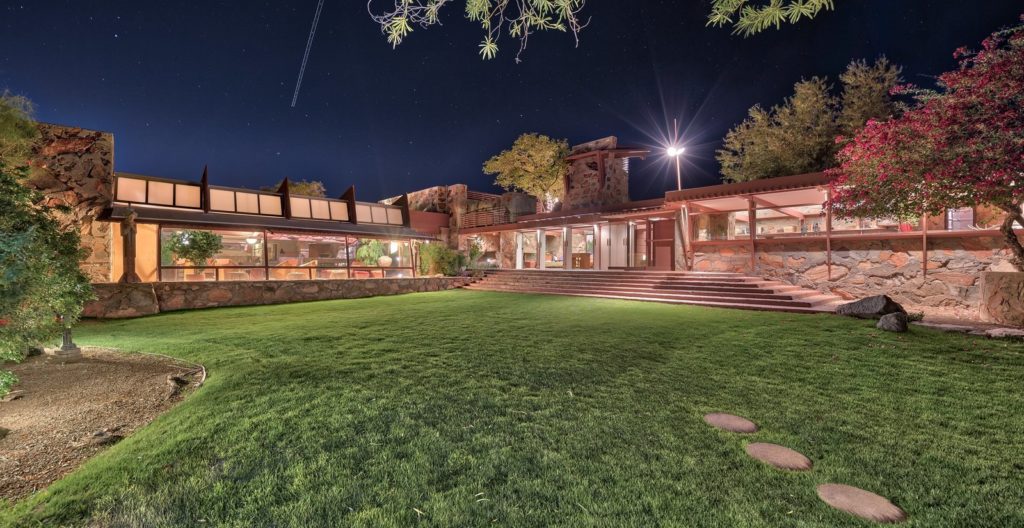
Taliesin West is a Frank Lloyd Wright masterpiece composed of locally sourced materials, rich red hues, and thoughtful indoor/outdoor connections. 

Frank Lloyd Wright’s School of Architecture Is Closing After 88 Years


The School of Architecture at Taliesin (SOAT), founded by Frank Lloyd Wright, is closing its doors this summer after 88 years of educating aspiring architects. The school’s Governing Board called the decision to shutter the institution “gut-wrenching.” In a statement, SOAT said that it was unable to reach an agreement with the Frank Lloyd Wright Foundation to keep the school open. 


Established in 1932 by Frank Lloyd Wright, the school was originally named the Frank Lloyd Wright School of Architecture. It took its current name in 2017 following the introduction of a new rule prohibiting accredited architectural schools from being financially dependent on non-academic institutions. This meant it needed to become an independent entity from the Frank Lloyd Wright Foundation, although its campuses remained on the foundation’s property at Taliesin and Taliesin West—and the two institutions were closely aligned.


After the official separation, the Foundation continued to support the school, donating more than $1.4 million through last year, according to Architect magazine, as well as the use of its facilities in Arizona and Wisconsin.

The School of Architecture at Taliesin is hosted in facilities at Taliesin and Taliesin West, where architecture students live and work immersed in Frank Lloyd Wright’s organic architecture.


SOAT will continue operating during the Spring 2020 semester, and it will officially close by the end of June. There are approximately 30 students currently enrolled, and an agreement is in the works to transfer their credits to Arizona State University’s Herberger Institute for Design and the Arts so that they can complete their degree programs.


“This is a sad and somber day for our school, our students and staff, and the architecture community,” said Dan Schweiker, chairperson of the school’s board of governors. “We are saddened we could not reach an agreement with the Frank Lloyd Wright Foundation to continue operating the architecture school. Our innovative school and its mission were integral to Frank Lloyd Wright’s vision for connecting architecture to our natural world. Wright’s legacy was not just building. It was a school to promulgate the lessons for all future generations.”


SOAT offered a unique, immersive experience for architecture students, who often designed and lived in their own residences at the Taliesin campuses. “In an age of so much turbulence, this school and its students provided so much peace,” said Jacki Lynn, a member of SOAT’s Board of Governors. “It breaks my heart that all the parties could not come together to ensure the proper legacy of this great American.”


Original source can be read from: Dwell
The Bauhaus, 1919–1933

The Bauhaus, 1919-1933

The Bauhaus was founded in 1919 in the city of Weimar by German architect Walter Gropius (1883–1969). Its core objective was a radical concept: to reimagine the material world to reflect the unity of all the arts. Gropius explained this vision for a union of art and design in the Proclamation of the Bauhaus (1919), which described a utopian craft guild combining architecture, sculpture, and painting into a single creative expression. Gropius developed a craft-based curriculum that would turn out artisans and designers capable of creating useful and beautiful objects appropriate to this new system of living.

The Bauhaus combined elements of both fine arts and design education. The curriculum commenced with a preliminary course that immersed the students, who came from a diverse range of social and educational backgrounds, in the study of materials, color theory, and formal relationships in preparation for more specialized studies. This preliminary course was often taught by visual artists, including Paul Klee, Vasily Kandinsky (1866–1944), and Josef Albers, among others.

Following their immersion in Bauhaus theory, students entered specialized workshops, which included metalworking, cabinetmaking, weaving, pottery, typography, and wall painting. Although Gropius’ initial aim was a unification of the arts through craft, aspects of this approach proved financially impractical. While maintaining the emphasis on craft, he repositioned the goals of the Bauhaus in 1923, stressing the importance of designing for mass production. It was at this time that the school adopted the slogan “Art into Industry.”

In 1925, the Bauhaus moved from Weimar to Dessau, where Gropius designed a new building to house the school. This building contained many features that later became hallmarks of modernist architecture, including steel-frame construction, a glass curtain wall, and an asymmetrical, pinwheel plan, throughout which Gropius distributed studio, classroom, and administrative space for maximum efficiency and spatial logic.

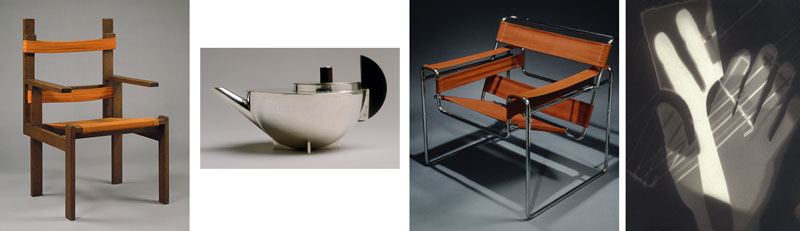
The cabinetmaking workshop was one of the most popular at the Bauhaus. Under the direction of Marcel Breuer from 1924 to 1928, this studio reconceived the very essence of furniture, often seeking to dematerialize conventional forms such as chairs to their minimal existence. Breuer theorized that eventually chairs would become obsolete, replaced by supportive columns or air. Inspired by the extruded steel tubes of his bicycle, he experimented with metal furniture, ultimately creating lightweight, mass-producible metal chairs. Some of these chairs were deployed in the theater of the Dessau building.

The textile workshop, especially under the direction of designer and weaver Gunta Stölzl (1897–1983), created abstract textiles suitable for use in Bauhaus environments. Students studied color theory and design as well as the technical aspects of weaving. Stölzl encouraged experimentation with unorthodox materials, including cellophane, fiberglass, and metal. Fabrics from the weaving workshop were commercially successful, providing vital and much needed funds to the Bauhaus. The studio’s textiles, along with architectural wall painting, adorned the interiors of Bauhaus buildings, providing polychromatic yet abstract visual interest to these somewhat severe spaces. While the weaving studio was primarily comprised of women, this was in part due to the fact that they were discouraged from participating in other areas. The workshop trained a number of prominent textile artists, including Anni Albers (1899–1994), who continued to create and write about modernist textiles throughout her life.
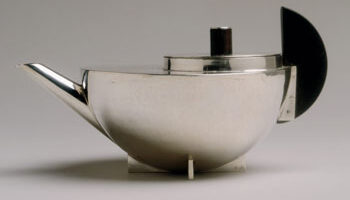
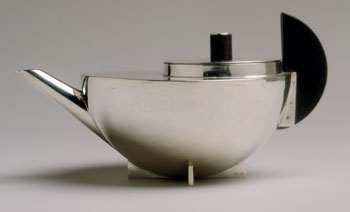
Metalworking was another popular workshop at the Bauhaus and, along with the cabinetmaking studio, was the most successful in developing design prototypes for mass production. In this studio, designers such as Marianne Brandt, Wilhelm Wagenfeld, and Christian Dell (1893–1974) created beautiful, modern items such as lighting fixtures and tableware. Occasionally, these objects were used in the Bauhaus campus itself; light fixtures designed in the metalwork shop illuminated the Bauhaus building and some faculty housing. Brandt was the first woman to attend the metalworking studio, and replaced László Moholy-Nagy as studio director in 1928. Many of her designs became iconic expressions of the Bauhaus aesthetic. Her sculptural and geometric silver and ebony teapot, while never mass-produced, reflects both the influence of her mentor, Moholy-Nagy, and the Bauhaus emphasis on industrial forms. It was designed with careful attention to functionality and ease of use, from the nondrip spout to the heat-resistant ebony handle.
The typography workshop, while not initially a priority of the Bauhaus, became increasingly important under figures like Moholy-Nagy and the graphic designer Herbert Bayer. At the Bauhaus, typography was conceived as both an empirical means of communication and an artistic expression, with visual clarity stressed above all. Concurrently, typography became increasingly connected to corporate identity and advertising. The promotional materials prepared for the Bauhaus at the workshop, with their use of sans serif typefaces and the incorporation of photography as a key graphic element, served as visual symbols of the avant-garde institution.

Gropius stepped down as director of the Bauhaus in 1928, succeeded by the architect Hannes Meyer (1889–1954). Meyer maintained the emphasis on mass-producible design and eliminated parts of the curriculum he felt were overly formalist in nature. Additionally, he stressed the social function of architecture and design, favoring concern for the public good rather than private luxury. Advertising and photography continued to gain prominence under his leadership.

Under pressure from an increasingly right-wing municipal government, Meyer resigned as director of the Bauhaus in 1930. He was replaced by architect Ludwig Mies van der Rohe. Mies once again reconfigured the curriculum, with an increased emphasis on architecture. Lily Reich (1885–1947), who collaborated with Mies on a number of his private commissions, assumed control of the new interior design department. Other departments included weaving, photography, the fine arts, and building. The increasingly unstable political situation in Germany, combined with the perilous financial condition of the Bauhaus, caused Mies to relocate the school to Berlin in 1930, where it operated on a reduced scale. He ultimately shuttered the Bauhaus in 1933.

During the turbulent and often dangerous years of World War II, many of the key figures of the Bauhaus emigrated to the United States, where their work and their teaching philosophies influenced generations of young architects and designers. Marcel Breuer and Joseph Albers taught at Yale, Walter Gropius went to Harvard, and Moholy-Nagy established the New Bauhaus in Chicago in 1937.

— Alexandra Griffith Winton
Independent Scholar

Charles and Ray Eames

Charles Eames and Ray Eames

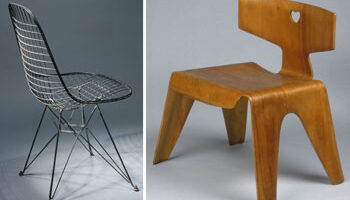
For more than four decades, American designers Charles and Ray Eames helped shape nearly every facet of American life. From their architecture, furniture, and textile designs to their photography and corporate design, the husband-and-wife team exerted a profound influence on the visual character of daily life in America, whether at work or at home. Their pioneering use of new materials and technologies, notably plywood and plastics, transformed the way Americans furnished their homes, introducing functional, affordable, and often highly sculptural objects and furnishings to many middle-class Americans.

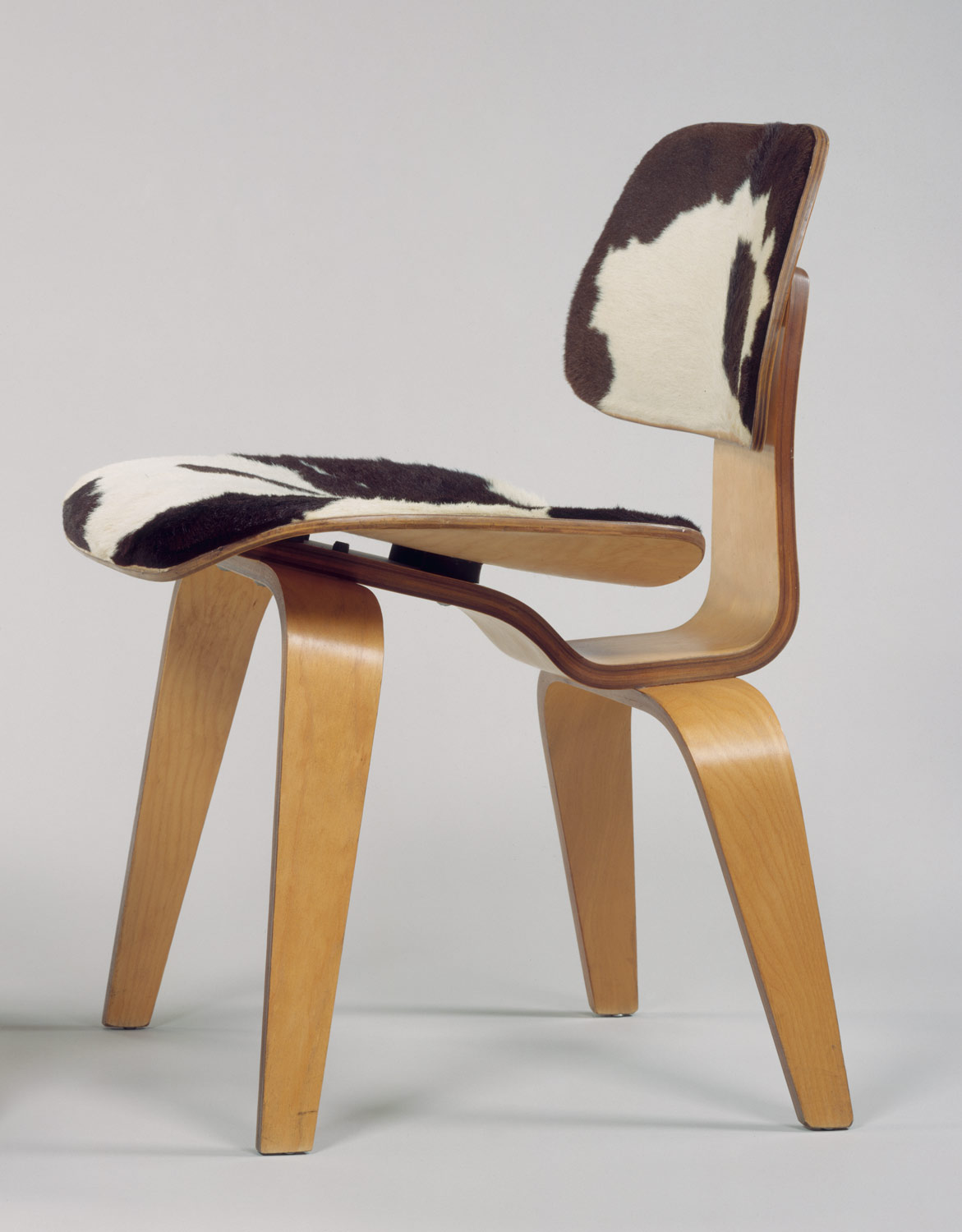
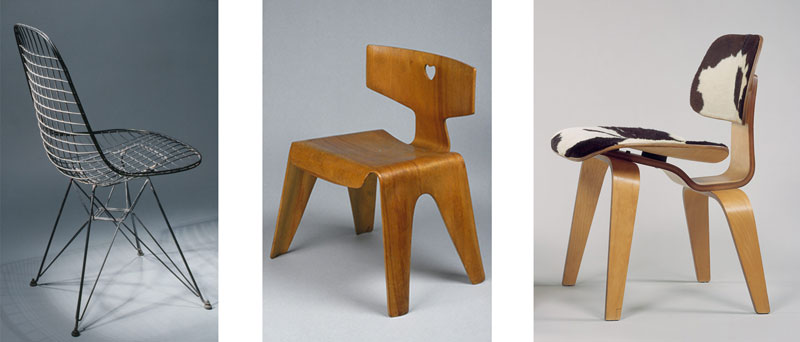
Charles Eames (1907–1978) and Ray Kaiser Eames (1912–1988) met while attending the Cranbrook Academy of Art in Bloomfield Hills, Michigan, and they married in 1941. From the beginning of their collaborative partnership, they focused on creating multifunctional modern designs. While at Cranbrook, Charles collaborated with Eero Saarinen on a group of wood furniture designs that won the Museum of Modern Art’s 1940 “Organic Design in Home Furnishings” competition. These designs, which included experimental molded plywood chairs, were conceived of as functional, affordable options for consumers seeking modern yet livable domestic surroundings. These issues proved to be the salient concerns of much of the Eames’ furniture designs of the next three decades.

The pair moved to Los Angeles in 1941, where Charles initially worked in the movie industry, while Ray created cover designs for the influential journal, California Arts and Architecture. They also continued their experiments with molded plywood, which began with Charles’ Cranbrook collaboration with Saarinen. Through the creative use of this industrial material, the Eameses sought a strong, flexible product capable of taking on myriad shapes and forms. These experiments included the construction of a special machine for molding the plywood, dubbed the Kazam! Machine, but it never produced satisfactory results. However, this work led to the Eames’ important contribution to the war effort. They received a contract from the U.S. Navy to develop lightweight, mass-produced molded plywood leg splints for injured servicemen, as well as aircraft components. Access to military technology and materials provided the final step in the Eames’ successful attempt to create stable molded plywood products. The resulting splint was both highly functional and sculptural, and suggests the fluid, biomorphic forms that characterized many of their subsequent furniture designs.
With the technological process for molding plywood resolved, Charles and Ray applied the method to the design of domestic furniture. After an exhaustive program of prototyping and testing, the first product was a simple plywood chair with both the seat and back supports gently curved so as to ergonomically and comfortably accommodate the human body. It was produced by the Herman Miller Company of Zeeland, Michigan, and marketed as an affordable, multifunctional chair suitable for all modern households. Known as the ECW (Eames Chair Wood) model, this chair is still in production today, and has exerted a profound and lasting impact on twentieth-century furniture design in America.

The Eameses eventually expanded the product line to include molded plywood dining chairs, tables, and storage units. Their experimental approach to materials continued through the subsequent decades with the use of molded fiberglass for a series of inexpensive shell chairs, a collapsible sofa, an upholstered, molded lounge chair, a range of aluminum-framed furniture, and many other innovative designs. The furniture designs of the Eameses were quickly adopted for both domestic and commercial use, and many of these extremely popular items are still in production today.

Ray Eames employed her graphic design skills to create a number of textile designs. Some of these fabrics were monochromatic, while others displayed bold color palettes. Most relied on repetitions of abstract, typically geometric forms, often obviously hand-drawn. The resulting effect was characteristic of much of the Eames’ work: it was both modern and humanistic, abstract yet approachable.

Following the success of their modern furniture designs, Charles and Ray turned their attention to domestic architecture to meet the postwar housing demand. The housing shortage predated the Great Depression, but the return of thousands of World War II veterans, combined with shortages in construction materials, created a real crisis. A project sponsored by California Arts and Architecture magazine, called the Case Study Houses, aimed to provide solutions to this problem by engaging young architects to design and build prototype—or case study—homes. The Eames’ contribution to this project, Case Study House #8, was built in 1951 in Pacific Palisades, California, as a family home for themselves. The Eameses employed standard industrial materials wherever possible, in response to the chronic shortages of many building materials: the factory sash windows, commercial doors, and corrugated steel roofing were all readily available, standard industrial building products.

The interior configuration of the house, with its expansive, double-height living room and flexible plan, replaced traditional, fixed room arrangements, and reflected the way the Eames family lived. This adaptable plan comprised of multipurpose spaces became a hallmark of postwar modern architecture. The furniture, art, and objects in the house revealed the Eames’ wide-ranging interests, from international folk art to Native American art to modern art and design. They used their own furniture, manufactured by Herman Miller, throughout the interior, in addition to pieces collected on their numerous trips abroad.In addition to graphic design, architecture, and furniture and product design, the Eameses also created innovative and groundbreaking films. Many of these were produced as corporate communications projects, such as their numerous films for IBM, while others were made at the behest of government organizations. For example, Glimpses of the U.S.A., made for the U.S. Information Service, was shown in Moscow in 1959, as was the exhibition and film, The World of Franklin and Jefferson, created as part of the national Bicentennial celebrations.

— Alexandra Griffith Winton
Independent Scholar

Farnsworth House

Mies van der Rohe's Farnsworth House

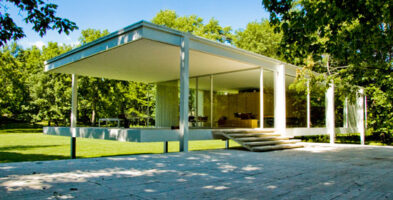
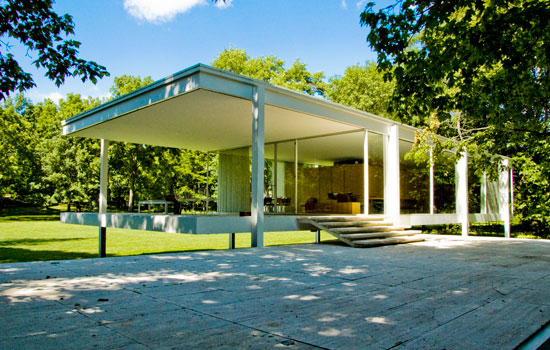
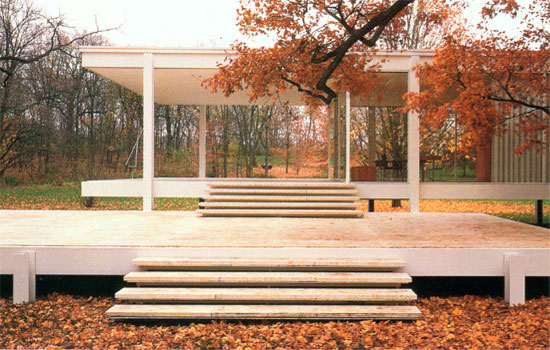
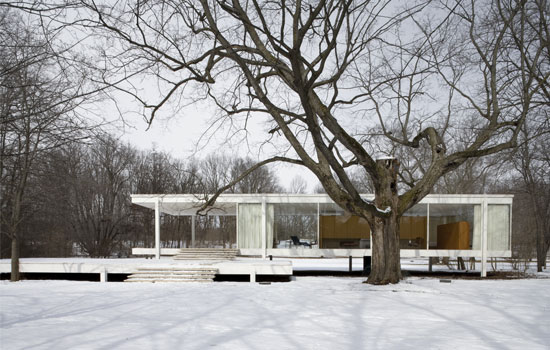
FARNSWORTH HOUSE has come to epitomize the International Stlye in American architecture. Designed in 1945 but not built until 1951, Farnsworth house is Mies van der Rohe’s iconic Mid-Century Modern home. Built in Plano, Illinois along the Fox River, the sleek and streamlined house melds beautifully with the surrounding wooded area. It’s complete wall of glass allows the visitor to feel at one with nature (as well as a bit of an exhibitionist).

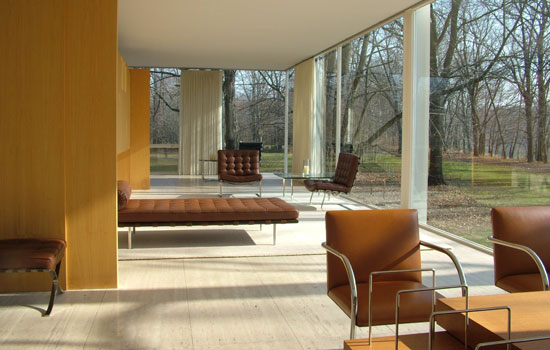
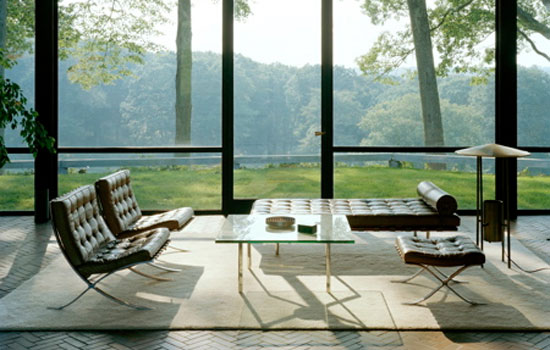
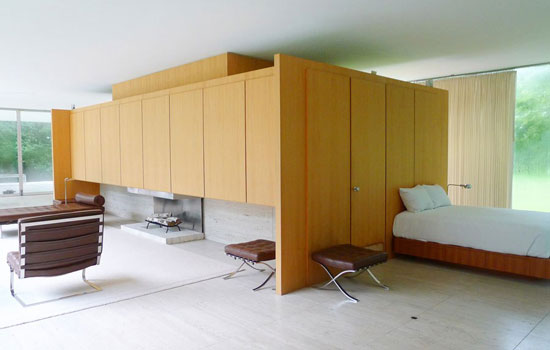
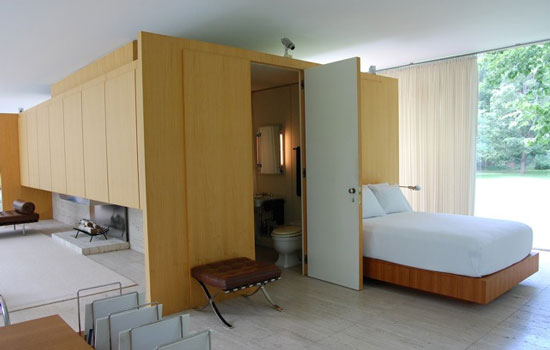
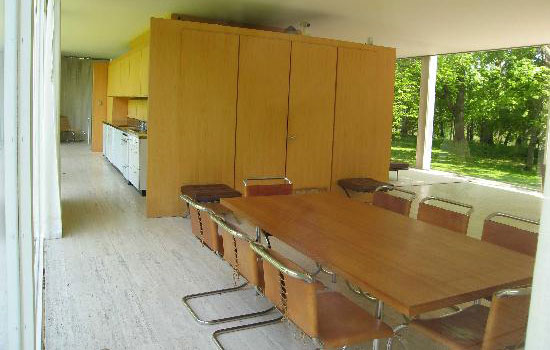
The kitchen, bathroom, and storage are all built into the house’s center core with very little of anything else to obstruct the view. Floor to ceiling curtain create some amount of privacy but it is truly a minimalist’s dream house. Populated with classic van der Rohe furnishings – Barcelona chairs, couch, stools, and table, and MR20 dining table and chairs — with travertine floors and minimal solid carpeting.

Often called a glass box, the house was designed as a retreat for Dr. Edith Farnsworth, a wealthy Chicago nephrologist as a one room weekend retreat. Farnsworth met van der Rohe at a dinner party in 1945 and asked him to build an important piece of architecture for her. She instructed him to build it as if he were building it for himself. Mies accepted and finished the design in time for a model to be included in an exhibition of his work at New York’s Museum of Modern in 1947. It was  lauded as a significant modern icon even before it was built.

Construction began in 1950 but was marred by several lawsuits — van der Rohe sued Farnsworth for non payment of invoices and Farnsworth sued van der Rohe for cost overruns. In the end van der Rohe won the suits (overruns had been approved by the client) and Farnsworth was ordered to pay the bills. Mies was never pleased that he personally did not complete such an important commission as the porch screens were finished by an assistant and no new furnishings were designed. Farnsworth continued to use the 1500 square foot house for 21 years as her retreat, often hosting parties for the architectural conoscenti, and sold it in 1972.

The new owner, Peter Palumbo, removed the bronze screens van der Rohe had designed to enclose the porch, extensively re-landscaped the property to accommodate his modern sculpture collection and, most importantly, furnished the house with van der Rohe’s furniture. Palumbo, after living in the house for 31 years, tried to sell it to the State of Illinois to be turned into a museum. The state could not bring itself to spend the $7 million and the house was put up for sale. The Friends of the Farnsworth House, the National Trust for Historic Preservation, and Landmarks Illinois were jointly able to purchase the property. The house has been restored to its pristine condition and is operated by the National Trust as a house museum.

FLOODING AT FARNSWORTH
The setting on the Fox River is extraordinary but it does come with it’s drawbacks. The floating terrace was not named as such because of local flooding but increased flooding remains a significant problem for the museum. In September of 2008, Hurricane Ike inundated the Fox River causing massive flooding and water rising 18 inches above the Farnsworth House’s travertine floors. Several options for resolving the issue include elevating the house, installing hydraulic lifts to raise the house in times of flood, or relocating the house. The last, being the most drastic, would completely alter this masterpiece.

Visit Farnsworth House’s website for more information on how you can visit.

Mies van der Rohe’s Iconic chairs

Mies van der Rohe Iconic Chairs

When Modern really was Modern

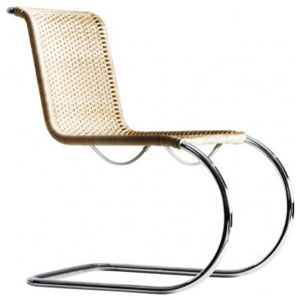
The world famous architect and designer Ludwig Mies van der Rohe, was also a renown furniture designer who’s iconic chairs grace modern buildings from home to office to public spaces. This modern design style is known as the International Style and van der Rohe stands out as one of it’s greatest proponents. He summed up modern design with what is probably the most famous architectural quote of the 20th century: less-is-more. Thus 20-century design, what we call modern, has indeed become an often repeated soundbite.

Deceptively simple, the sleekly styled furniture van der Rohe designed often used expensive materials that put them out of reach of ordinary people. Here are a few of his best know works that have become the foundation on which Mid-Century Modern is based.

Barcelona chair:
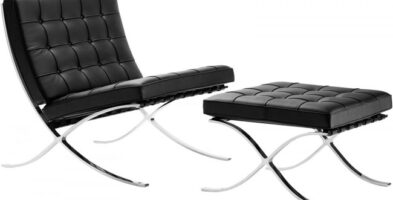
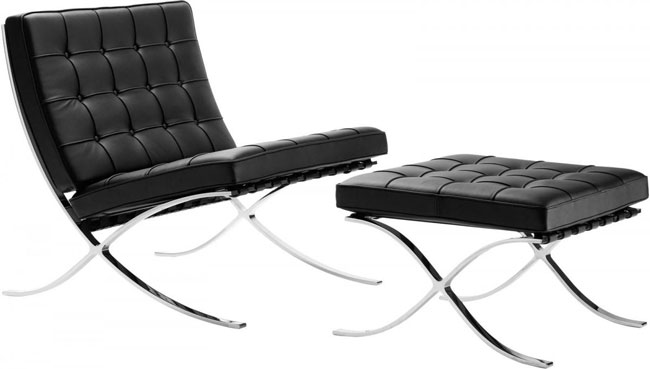
Probably Mies van der Rohe’s most important chair is the International Style icon known as the Barcelona chair. As modern a classic as when it was released in 1929, it is found from the mid-century modern home to the modern urban building lobby. Design credit is shared with Lilly Reich for the German Pavilion at the International Expo of 1929, which was held in Barcelona, hence the name. Originally of bolted metal, the chair was redesigned in the mid 1950’s using solid stainless steel construction. The design was sold to Knoll in 1965 and production has never ceased.

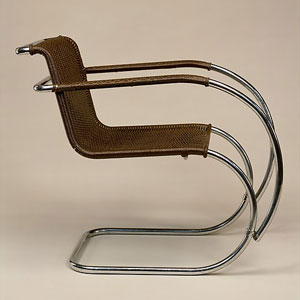
MR20 chair:
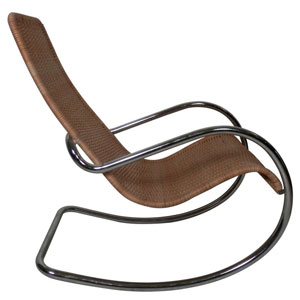
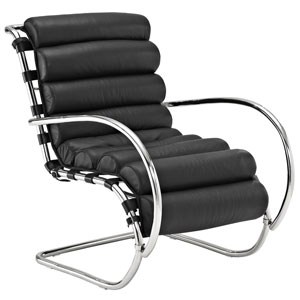
Designed in 1927 of tubular steel with painted caning, newer versions by Knoll have banded leather seats and back. Again, the cantilevered seat and one-piece construction makes this an icon of the early 20th century. Marcel Breuer, a Bauhaus designer of the same era whose use of leather on his famous Wassily chair inspired van der Rohe. There are also variations on the theme using padded leather strips with arms and as a rocking chair.

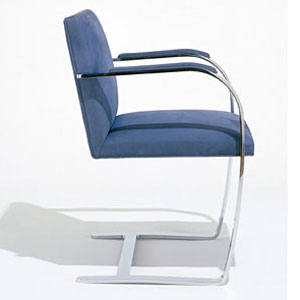
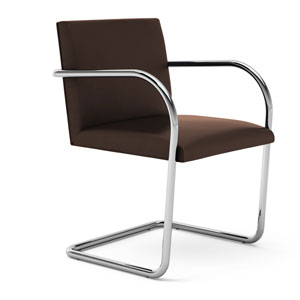
Brno Chair:
Again working with Lilly Reich, this 1929/30 was designed for the Tugendhat House in Brno, Czech Republic. It is another classic modern piece with a steel frame whose design was sold to Knoll in the 1950’s. It is comprised of a single piece of metal bent to form the back support, arms, legs, and base. The ingeniously designed cantilevered seat and back were upholstered in leather. Originally of tubular or flat steel, the more popular flat were in stainless steel with later versions favoring chrome plating. It was simply groundbreaking for 1929.

Find out more about Mies van der Rohe on Wikipedia.

Learn more about these chairs by visiting the Museum of Modern Art’s website:

Barcelona chair
Brno chair
Wassily chair
by Marcel Breuer

What is Mid-Century Design?

Modern-House_OPT

What is Mid-Century Design?

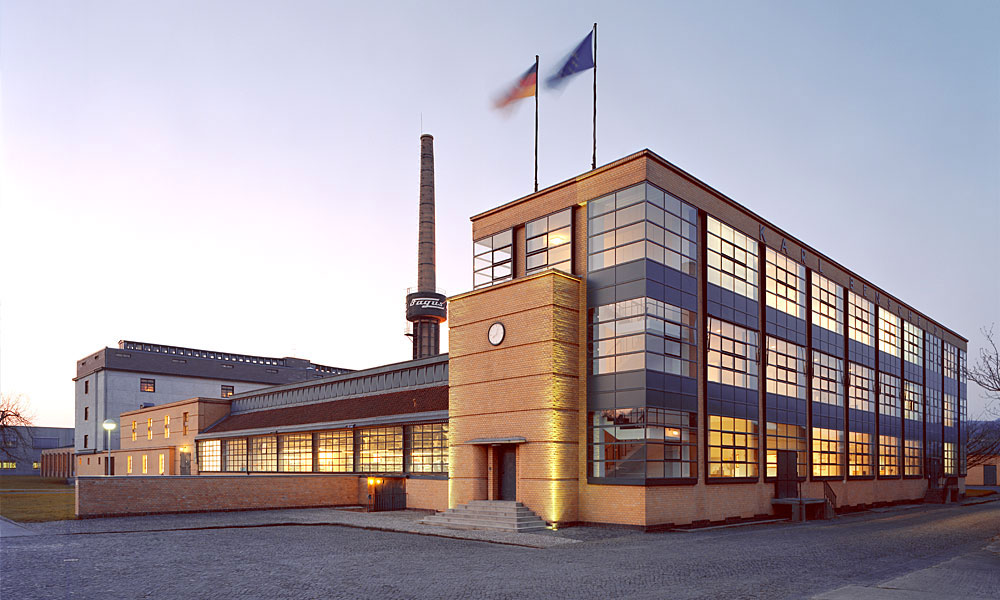
Fagus_Gropius_OPTMid-Century Modern is an architectural, interior, product and graphic design aesthetic that is characterized by simplicity, openness, and sensitivity to site and nature. Its origins are traced directly from the celebrated German Bauhaus School.

Bauhaus founder Walter Gropius began his ascent to leadership in the modern movement with his 1911 design for a shoe factory. Gropius designed the building on a steel skeleton and included an unusual quantity of glass, creating an open, airy feeling. That innovative design brought him the commissions he needed, and his success was a major factor in the rise of avant garde Modernist ideals.

Gropius believed creativity could be applied in any area, and parlayed his success as an architect  into commissions to design everything from furniture to a sleeping car for the German railway, and even a diesel locomotive. The arc of Mid-Century design eventually encompassed the fields of fine art, furniture, lighting, ceramics, advertising, automobiles, and clothing.

The Bauhaus led the modern movement in Europe and then transplanted its roots in the New World when the school was closed down by the Nazi regime (the anti-Classical ideals of the Bauhaus were considered “decadent” by the Nazis).Gropius brought his genius to America, as did his protégé, Marcel Breuer.

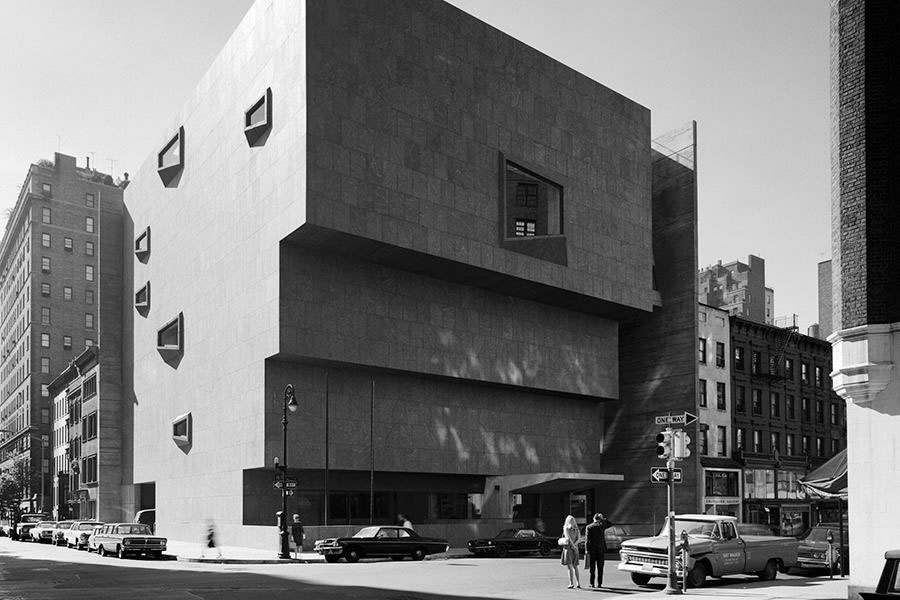
Whitney-Museum_OPTOn the East Coast, Breuer and four of his students at Harvard (Philip Johnson, Landis Gores, Eliot Noyes, and John Johansen) were hugely influential, and were dubbed “The Harvard Five.”

These five built glass, wood, steel, and fieldstone houses in the rural area around New Canaan, Connecticut  during the period from the late 1940s to the late 1960s. Their work was a shock to the local system, totally unlike the staid clapboard New England colonials that were the norm. The quiet little town saw an influx of gawkers and “house tour” participants, and the bold new designs were vilified by locals with descriptions such as “an architecture as gracious as Sunoco service stations,” “cracker boxes,” and “packing boxes.” One unhappy neighbor penned this little verse….

“They’re lousing up the countryside with buildings most alarming,
It isn’t like New Canaan, where everything’s been charming.”

Pure Mid-century home design eventually took a back seat to the “modern” mutations of 1970s suburban tracts, and then to the “McMansions” of  the 1980s and later.  But in more recent years, it has had a roaring comeback.
Some of that surge of interest can probably be attributed to Baby Boomers who have become nostalgic for their childhood environment. However, the Mid-Century cachet seems to be even more attractive to the fast-paced, tech-savvy young people who are now in the process of building, renovating, and buying all the accoutrements associated with home design. The return to favor of the ideals expressed in Mid-Century architecture has brought on a wave of skyrocketing prices for the furnishings and art that were languishing in second-hand shops and attics for years.

Here are a few examples of striking, well-known mid-century homes designed by some of the architects who became “stars” of the period . . .

Glass House: The revolutionary Glass House, New Canaan, CT was designed in 1949 by architect Philip Johnson as his own residence. Interior space is divided by low walnut cabinets and a brick cylinder that contains the bathroom. Glass House is set in a beautiful open landscape.

VDL Studio and Residence:  Architect Richard Neutra originally designed a 1933 research house in Silver Lake, Calif., and named it after his benefactor, Dr. C.H. Van Der Leeuw. After a fire destroyed the original structure, Neutra rebuilt in 1966, calling the updated abode VDL House II.

Farnsworth House: Designed by Ludwig Mies van der Rohe, this 1951 house in Plano, Ill., is known for its transparency and simplicity.

Stahl House – Case Study House 22: This spectacular 1960 glass house seems to float above Los Angeles in the Hollywood Hills, was designed by Pierre Koenig.

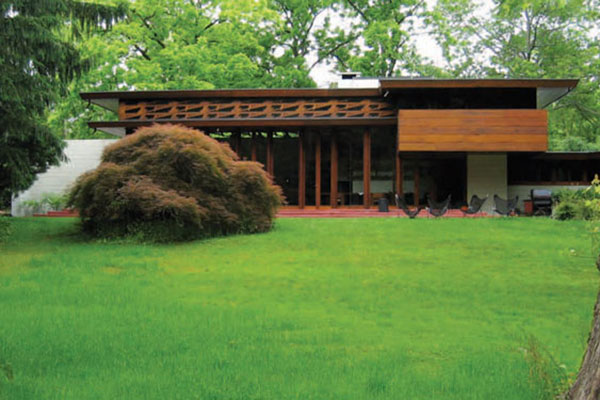
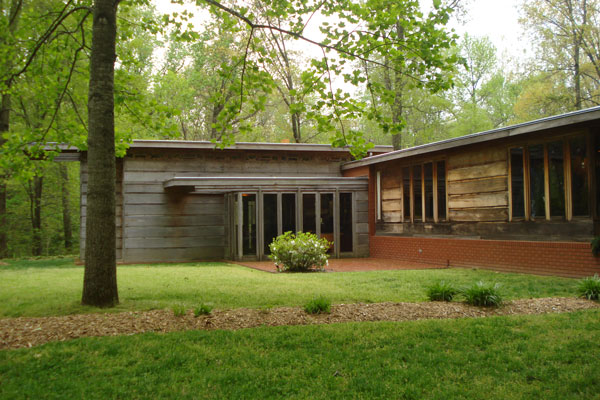
Much of Frank Lloyd Wright’s genius lay in his ability to be a fearless innovator. His idea of building decentralized, affordable communities in harmony with nature eventually led to his design of the “Usonian” house. There are a number of these houses throughout America, and Westchester County’s Pleasantville is home to an entire community called “Usonia.” Designed and planned by Wright in the late 1940s, the 47-plot site stands as a testament to his belief in “organic” community living. About sixty per cent of the property is forest and meadowland. Wright’s love of the natural was present in all of his work, and he once said that “nature is the only body of God we shall ever see.”

Wright coined the name Usonia as a sort of acronym for “United States of North America,” a tribute to the American way of life and his desire to interpret it for the modern world. He designed large beautiful homes for some wealthy clients, but his fond dream was to allow America’s middle class families to have simple homes of great beauty and style that would offer them a connection to the natural world in their everyday lives.

He short-circuited many building costs to create affordability. Usonian homes were designed to be built on flat slabs (no basement digging required) fitted with radiant heat. The plan followed a compact L-shape with two wings. Wright cut out layers of materials that were in general use….lathe, plaster, paint, wallpaper…. and used wood, concrete and brick in their natural state. He designed built-in furniture, storage and lighting. Wright originated the use of the “carport” to eliminate the cost of building a garage. Usonian houses are sited to make the best use of the particular landscape, and are built largely from materials native to the geographic area.

Wright designed three of the homes at Usonia himself, and the others were designed by architects who followed his style and sensibility. They include Paul Schweikher, Theodore Dixon Bower, Ulrich Franzen, Kaneji Domoto, Aaron Resnick and David Henken (an engineer and Wright apprentice).Until very recent years, these homes rarely changed hands, and original owners would often add to them rather than leave them.

Ironically, Wright’s fame and lasting style and the high cost of housing in Westchester have increased the value of these homes to a level that makes them unattainable for the middle-class buyer. However, his impact on the American mid-century influenced the development of open-flow ranch style homes and even of the attractive pre-fabricated homes marketed today.

Frank Lloyd Wright Tours

Discover Frank Lloyd Wright in these fantastic tours of Chicago and surrounding communities.

This is Frank Lloyd Wright at his absolute best. The Frank Lloyd Wright Trust, previously known as the Frank Lloyd Wright Home and Studio Foundation offers a variety of tours of some of the best Wright buildings in and around Chicago. Begin with his home and Studio (a must to understanding Wright) and then move on to other Oak Park houses and into Chicago. Definitely worth a few extra days next time you’re in the Chicago area.

The Frank Lloyd Wright Trust

Established in 1974, the Trust a not-for-profit organization, to acquire and preserve Wright’s Home and Studio in Oak Park as the place where Wright formulated the architectural principles he retained throughout his career. In 1975, the Home and Studio became a co-stewardship property of the National Trust for Historic Preservation, and the Home and Studio Foundation embarked on its mission to restore and operate the building as a historic house museum.

In 1976, the Home and Studio was declared a National Historic Landmark. The ensuing $3+ million restoration was completed in 1987, at which time it received the American Institute of Architects’ prestigious National Honor Award.
In February 1997, the Home and Studio Foundation, by invitation of University of Chicago entered into an agreement to assume sole responsibility for the management, operation and restoration of Wright’s Robie House, located on the University of Chicago campus. In 2000, the Home and Studio Foundation changed its name to the Frank Lloyd Wright Preservation Trust to better reflect the dual stewardship of the Frank Lloyd Wright Home and Studio and Wright’s Robie House.

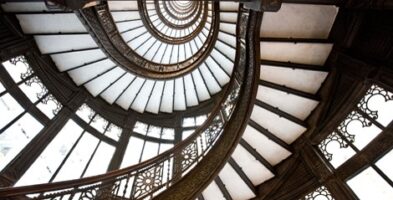
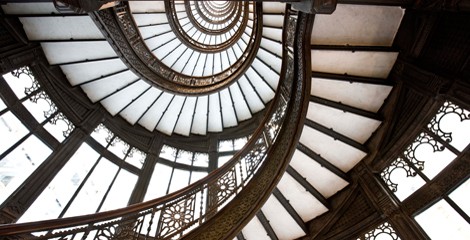
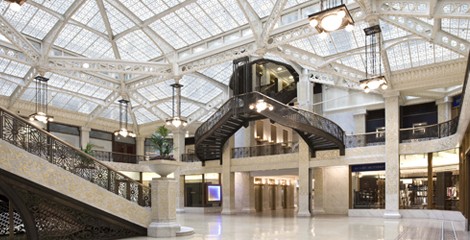
In December 2010, the Trust realized a long-standing dream of a downtown location by opening central offices at The Rookery, a Chicago landmark building. The Rookery contains one of Wright’s most dramatic interior compositions in its luminous central light court.

In May 2012, the Trust acquired sole ownership of the Frank Lloyd Wright Home and Studio from the National Trust for Historic Preservation. The transfer of ownership marked a new chapter in the history of the Trust.

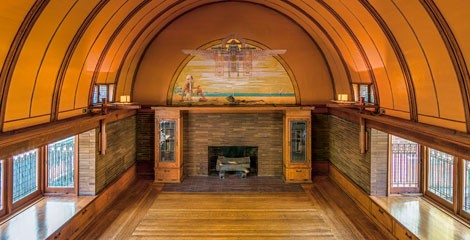
In 2012, the Trust began operation of tours at the Emil Bach House, a Chicago landmark on Chicago’s north side shoreline neighborhood of Rogers Park, and in September 2013, the Trust assumed responsibility for the operation of tours and programs at Unity Temple, three blocks from Wright’s Home and Studio in Oak Park.

Frederick C. Robie House
The Robie House on the University of Chicago campus is considered one of the most important buildings in the history of American architecture. It was created by Frank Lloyd Wright for his client Frederick C. Robie, a forward-thinking businessman. Designed in Wright’s Oak Park studio in 1908 and completed in 1910, the building is both a masterpiece of the Prairie style and renowned as a forerunner of modernism in architecture.

The Rookery
Set in the heart of Chicago’s financial district, at 209 South LaSalle Street, Daniel Burnham and John Root’s Rookery Building is a Chicago landmark, containing a luminous and brilliantly articulated central light court remodeling by Frank Lloyd Wright.

Bach House
The richly conceived yet intimately scaled Bach House (1915) adopts the vocabulary of the Prairie house, but looks toward future stylistic directions in Wright’s work. Described as “semi-cubist,” its compact plan is a modification of Wright’s “fireproof house,” which was published in 1907 in Ladies Home Journal. The residence is being meticulously restored to its original appearance.

Unity Temple
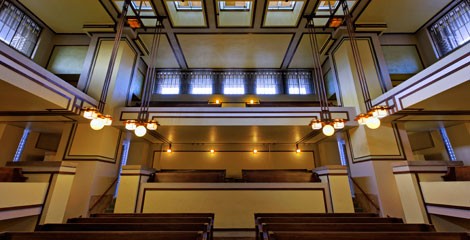
Unity Temple is undergoing restoration and is closed to the public. Tours will resume at the conclusion of the restoration project, estimated to be in late 2016. Please return to this site for information. Unity Temple is Frank Lloyd Wright’s only surviving public building from his Prairie period. Limited by a modest budget and an awkward site, Wright created a bold design and used unconventional materials to produce one of his most significant accomplishments.

Wright Plus Housewalk
The annual Wright Plus Housewalk features rare interior tours of private homes and public buildings designed by Frank Lloyd Wright and his contemporaries in Oak Park, Illinois.

Pedal Oak Park
Oak Park is home to the world’s largest collection of buildings designed by Frank Lloyd Wright. Explore its picturesque historic neighborhoods on a guided bicycle tour of 22 Wright-designed structures.

Wright Around Chicago
Chicago is where the legendary architect Frank Lloyd Wright spent the first 20 years of his career. Leave the driving to us as you experience the best of Frank Lloyd Wright’s Chicago with expert commentary about the life and work of the man who established a uniquely American style of architecture, and interior tours of his famous sites.

Oak Park Combination Tour
Planning to tour the Home and Studio and the surrounding historic district during your visit to Oak Park? Choose our Oak Park Combination Tour to save time and money.

Wright Around Oak Park
This in-depth tour showcases the very best of Wright in Oak Park in the company of an expert guide. Enjoy visits to the Home and Studio, through the Frank Lloyd Wright Historic District, and Unity Temple.


What a great way to discover Wright’s work in and around Chicago.

Check them all out.

The rebirth of Westcott House

The rebirth of Frank Lloyd Wright's Westcott House

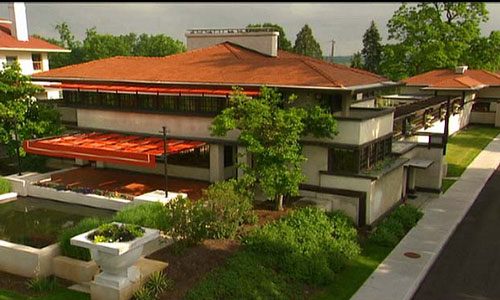
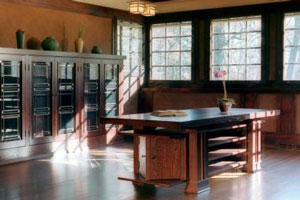
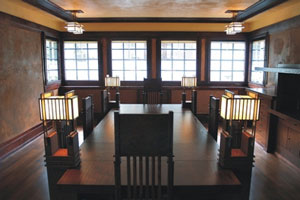
Watch this amazing video of the restoration of Westcott House, Frank Lloyd Wright’s 1908 Prairie Style* masterpiece.

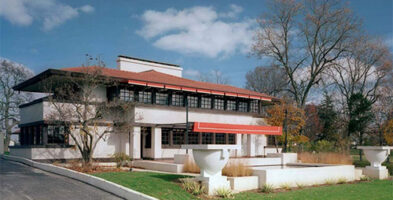
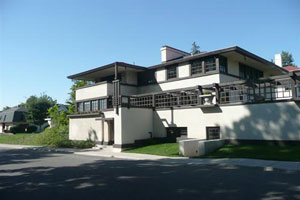
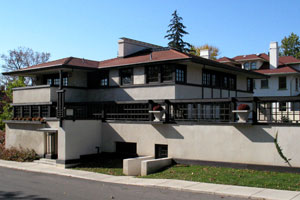
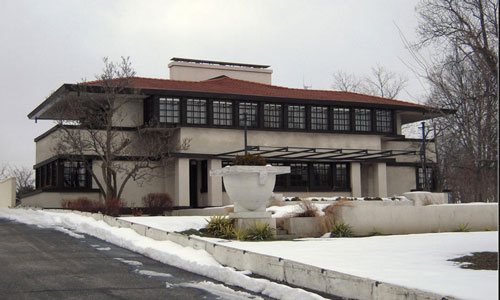
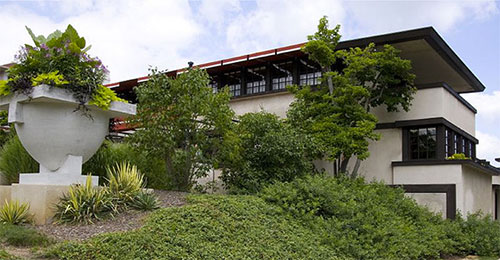
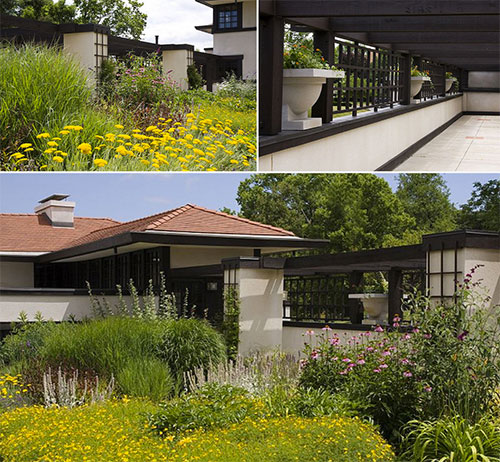
Springfield, Ohio’s Westcott House was built in 1908 for Burton J. Westcott (of The American Seeding Machine Company) and his family. Built in the Prairie Style, of which Wright was the most famous proponent, is characterized by horizontal lines, flattened or often hipped roofs with wide overhangs, and windows that formed horizontal bands around the house.

Westcott_B_OPT

Wright, and other architects of the style, felt that the Victorian homes of the time were boxy and confined. Their new designs featured longer rooms with open plans, often room dividers in leaded glass, and extensive use of custom and built in furniture. A unified design aesthetic was therefore achieves as the interior and exteriors were often conceived of as one piece.

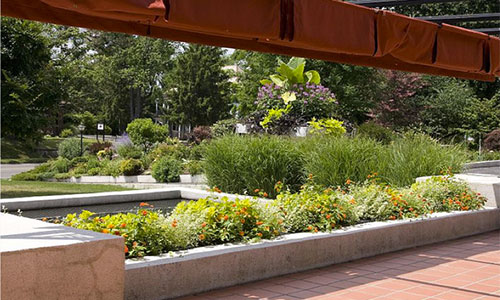
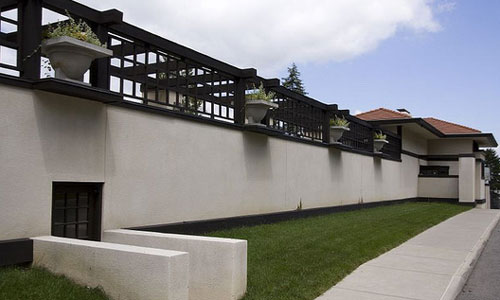
As with most Mid-Century Modern homes, the extensive use of windows (often series of narrow windows in groups as opposed to modern houses that use large, single paned or expanses of glass) were a device to bring the outdoors into the home. Landscaping was thus an important part of the entire Prairie School aesthetic. Wright connected the Westcott House to it’s stables with a long pergola that extended the horizontal aspect of the house to much of the property.

After both Mr Westcott and his wife had died by 1926, the house was sold several times and eventually fell into disrepair. By 2001 the Westcott House Foundation was formed and, after extensive restoration, the house was opened to the public in 2005. Today it stands as a testament to the genius of Frank Lloyd Wright and a beautifully preserved example of the Prairie style he encouraged across the Mid West.

Westcott-C_OPT

Check out their website for more information on the Westcott House, the foundation, and events. Find out more about Frank Lloyd Wright.


* The term Prairie Style was popularized after Frank Lloyd Wright’s plan for what he called “A Home in a Prairie Town” appeared in a 1901 article in The Ladies Home Journal. The early Prairie Style houses were of wood and plaster or board and batten but soon were made of brick with stone accents and eventually concrete blocks. Wright’s forward thinking and embracing of modern innovations in construction techniques always pushed his work to the forefront of what would be considered Modern.

Frank Lloyd Wright’s Usonian House

Explore some other Usonian houses located throughout the country:

The Jacobs House – Madison, Wisconsin, 1936

Hanna (Honeycomb) House – Palo Alto, California, 1936

Pope-Leighy House – Mount Vernon, Virginia, 1939

Jacobs House II – Middleton, Wisconsin, 944

Walker House – Carmel, California, 1948

Palmer House – Ann Arbor, Michigan, 1950

Shavin House – Chattanooga, Tennessee, 1952

Tracy House – Seattle, Washington, 1955

Seth Peterson Cottage – Lake Dalton, Wisconsin, 1958

FRANK LLOYD WRIGHT'S USONIAN HOUSE

Much of Frank Lloyd Wright’s genius lay in his ability to be a fearless innovator. His idea of building decentralized, affordable communities in harmony with nature eventually led to his design of the “Usonian” house.

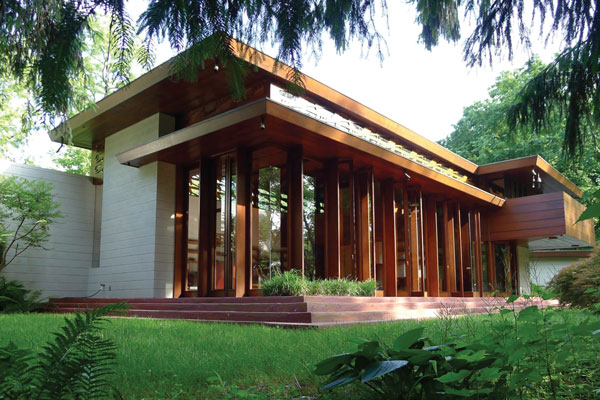
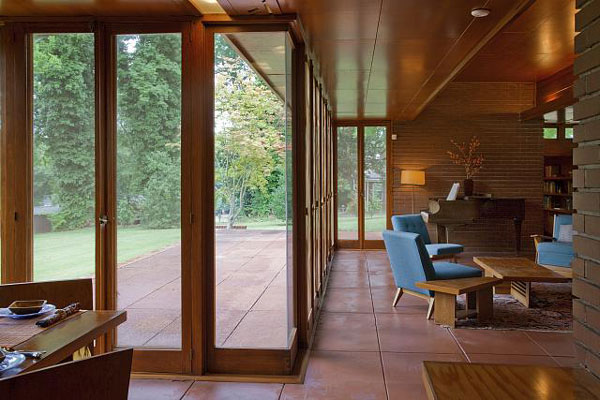
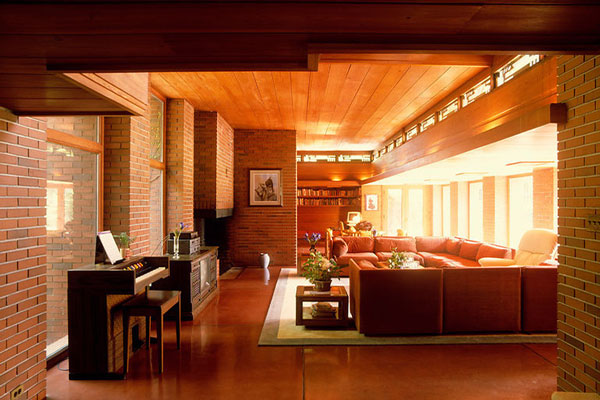
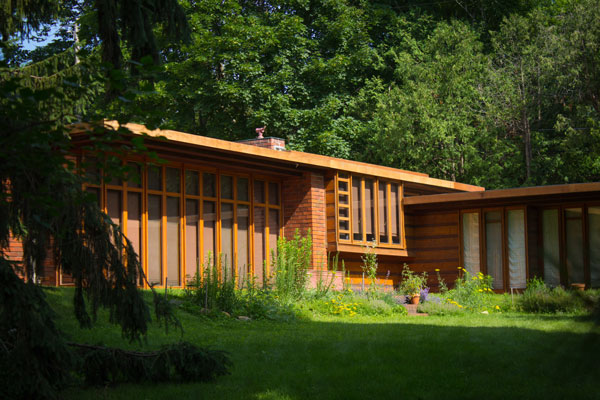
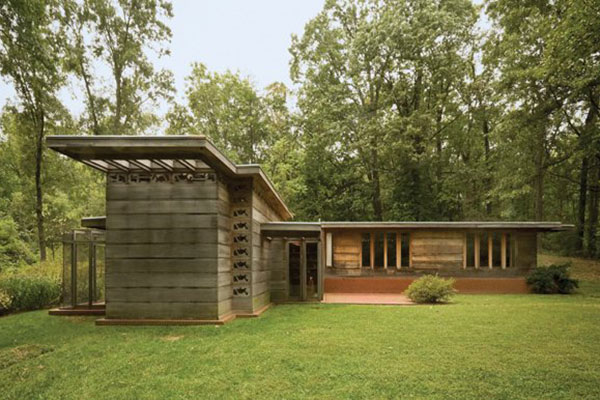
Usonian is a term usually referring to a group of approximately sixty middle-income family homes designed by Frank Lloyd Wright beginning in 1936 with the Jacobs House. The “Usonian Homes” were typically small, single-story dwellings without a garage or much storage. They were often L-shaped to fit around a garden terrace on unusual and inexpensive sites. Constructed with native materials, flat roofs and large cantilevered overhangs for passive solar heating and natural cooling, natural lighting with clerestory windows, and radiant-floor heating. A strong visual connection between the interior and exterior spaces is an important characteristic of all Usonian homes. The word carport was coined by Wright to describe an overhang for sheltering a parked vehicle.

There are a many examples of Usonian houses throughout America, and Westchester County’s Pleasantville is home to an entire community called “Usonia.” Designed and planned by Wright in the late 1940s, the 47-plot site stands as a testament to his belief in “organic” community living. About sixty per cent of the property is forest and meadowland. Wright’s love of the natural was present in all of his work, and he once said that “nature is the only body of God we shall ever see.”

Wright coined the name Usonia as a sort of acronym for “United States of North America,” a tribute to the American way of life and his desire to interpret it for the modern world. He designed large beautiful homes for some wealthy clients, but his fond dream was to allow America’s middle class families to have simple homes of great beauty and style that would offer them a connection to the natural world in their everyday lives.

He short-circuited many building costs to create affordability. Usonian homes were designed to be built on flat slabs (no basement digging required) fitted with radiant heat. The plan followed a compact L-shape with two wings. Wright cut out layers of materials that were in general use….lathe, plaster, paint, wallpaper…. and used wood, concrete and brick in their natural state. He designed built-in furniture, storage and lighting. Wright originated the use of the “carport” to eliminate the cost of building a garage. Usonian houses are sited to make the best use of the particular landscape, and are built largely from materials native to the geographic area.

Wright designed three of the homes at Usonia himself, and the others were designed by architects who followed his style and sensibility. They include Paul Schweikher, Theodore Dixon Bower, Ulrich Franzen, Kaneji Domoto, Aaron Resnick and David Henken (an engineer and Wright apprentice).Until very recent years, these homes rarely changed hands, and original owners would often add to them rather than leave them.

Ironically, Wright’s fame and lasting style and the high cost of housing in Westchester have increased the value of these homes to a level that makes them unattainable for the middle-class buyer. However, his impact on the American mid-century influenced the development of open-flow ranch style homes and even of the attractive pre-fabricated homes marketed today.

Have a look at iconic Usonia houses: