Katonah, New York

Explore Westchester County

Katonah, New York

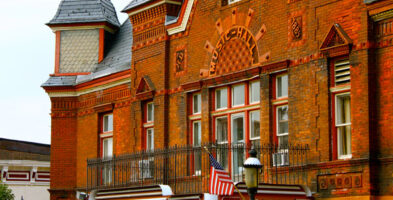
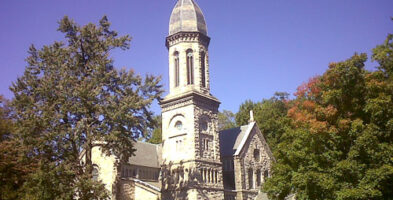
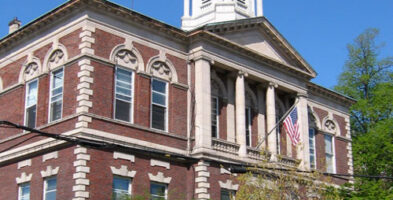
Katonah, New York was named after Chief Katonah the Native American from whom English colonists purchased what would become the Town of Bedford in Westchester County, New York. It is about 50 miles north of New York City.

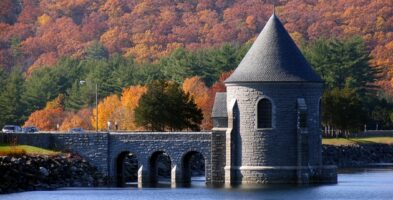
Founded with the name Whitlockville, the town changed its name, and later was moved to its present site in 1897, when its former site (Old Katonah) was flooded by the construction of the Cross River Reservoir. More than 50 buildings were moved from the old site to New Katonah, were rolled on logs pulled by horses. The move was originally ordered to start in 1894, but litigation delayed the process by almost three years. Katonah was not the only village affected by New York City’s growing demand for water. The villages of Kirbyville and New Castle Corners were also condemned by the city but were never moved.
The Katonah Village Historic District was added to the National Register of Historic Places in 1983.

Primary and secondary schools:
Katonah is a part of the Katonah-Lewisboro School District. It contains Katonah Elementary School, although some residents go to the neighboring “Increase Miller Elementary School” in Goldens Bridge. In 2014, the school district voted to get rid of the Lewisboro Elementary school, moving elementary students around to other institutions within the district. This created huge controversy with parents, as many of them did not believe this change was necessary, and even filed petitions and hosted strikes against this act. Both schools matriculate into John Jay Middle School and John Jay High School. Katonah is also home to two (2) private schools, the co-educational, college preparatory school The Harvey School, and The Montfort Academy, a private, Roman Catholic high school that recently moved to Mount Vernon, New York.

Area
• Total   0.8 sq mi (2.1 km2)
• Land   0.7 sq mi (1.9 km2)
• Water   0.08 sq mi (0.2 km2)
Population (2010)
• Total   1,679
• Density   2,289/sq mi (883.7/km2)

Find out more by visiting Katonah’s official website at: katonahny.com


Read what the New York Times September 15, 2002 article has to say about living in Katonah
Pound Ridge, New York

Explore Westchester County

Pound Ridge, New York

Once inhabited by the various Native Americans known as the Wappinger Confederacy. A dispute over taxation, land sales, and hunting rights led to the Pound Ridge Massacre in March of 1644 by a force of 130 soldiers and members of the Dutch West India Company. Between 500 and 700 Native Americans were killed, the single largest massacre on record. It led to the Wappinger Confederacy’s suing for peace at Stamford later that year. European settlers, mostly from the settlement at Stamford, then occupied Pound Ridge. The borders of Pound Ridge were much in dispute over the next 150 years and the area saw much action during the Revolutionary War.

In 1782 Pound Ridge was incorporated officially with a population of slightly over 700. Growth was slow in this rural agricultural community with the 1860 census showing the number had only doubled. A major industry of making shoes began to supplement the agrarian economy.

Today Pound Ridge is an affluent village in Westchester County, New York, near the Connecticut border and not far from Stamford. The population, as of the 2010 census was 5,104. The business district is considered Scotts Corners where markets, antique shops, the local firehouse, and post office are located. Of particular note is the rich architectural diversity Pound Ridge offers. From historic homes to extraordinary Mid-Century Modern and stunning Contemporary buildings set within wooded parcels of spectacular beauty. Pound Ridge is a haven for those who love great architecture.

Primary and secondary schools:
Pound Ridge children are served by the Pound Ridge Elementary Schools (K-5) and then the Fox Lane Campus for middle and high school, part of the Bedford Central School District. ,

Pound Ridge Newsletter:
For more information of Pound Ridge have a look at the newsletter their Historical Society puts out. Go to Newsletter

Area
• Total   23.44 sq mi (60.70 km2)
• Land   22.64 sq mi (58.63 km2)
• Water   0.80 sq mi (2.07 km2)
Population (2010)
• Total     5,104 (estimated in 2016 5,233)
• Density   231.19/sq mi (89.26/km2)
Find out more by visiting Irvington’s official website at: townofpoundridge.com


Read what the New York Times has to say about living in Pound Ridge

Ardsley, New York

Explore Westchester County

Ardsley, New York

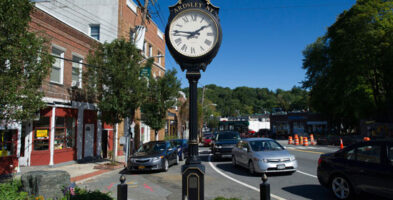
Ardsley is another of the storied Hudson Valley thriving suburban villages of Westchester County. Located between the Sprain Brook and Saw Mill Rivers, it originally was the hunting ground of the Wickquasgeck Indians. During the Hudson River Valley’s Dutch period, the land was owned (purchased in 1682) by Frederick Philipse and later confiscated after the Revolutionary War and was divided. From some of the portions of land sold to tenant farmers of the original tract, the village of Ashford was formed later to be called Ardsley. With the creation of the Croton Aqueduct in the 1880’s the town experienced somewhat of a population and business boom.

Ardsley public schools consist of Concord Road Elementary, Ardsley Middle School, and Ardsley High School.
Private schools include St James The Apostle School (PK-8), Longview School (PK-12), Hampton Schools (PK-1), and Lyceum Kennedy International School (PK-12).

Ardsley is served by the Bee-Line Bus System connecting it to White Plains, Elmsford, Yonkers, Dobbs Ferry, Larchmont, Scarsdale, and New Rochelle.

The closest Metro-North’s Hudson line enables commuters to be at Grand Central Station in a little more than half an hour with the Ardsley-on-Hudson and Dobbs Ferry stations within minutes of the center of Ardsley. Alternately, Metro-North Railroad’s Harlem Line brings commuters to its Hartsdale and Scarsdale train stations nearby.

Area
• Total     1.3 sq mi (3.4 km2)
• Land     1.3 sq mi (3.4 km2)
• Water     0.0 sq mi (0.0 km2)
Elevation     210 ft (64 m)
Population (2010)
• Total     4,452
• Density     3,400/sq mi (1,300/km2)

Dobbs Ferry, New York

Explore Westchester County

Dobbs Ferry, New York

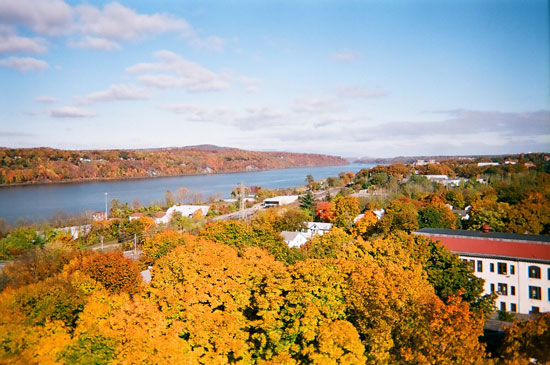
Dobbs Ferry is another of the storied villages along the Hudson River in Westchester County a short distance from the Tappan Zee Bridge and about 20 minutes north of the George Washington Bridge. In 2014 it earned the distinction as being the first New York State village to be certified as a Climate Smart Community.

The town was named for a ferry that crossed to Sneden’s Landing on the west side of the Hudson River. In 1781, during the Revolutionary war, General George Washington and the Continental Army were encamped at Dobbs Ferry. It was then than an intercepted letter caused him to readjust his war strategy and, instead of engaging British forces in Manhattan, the Continental Army marched south 400 miles to Virginia. The war was won soon afterwards.

National Register of Historic Places include the Estherwood House, the South Presbyterian Church, and the Hyatt-Livingston House

Education
• Springhurst Elementary, for grades kindergarten through grade 5;
• The Dobbs Ferry Middle School for grades 6– through 8;
and the Dobbs Ferry High School
• Alcott Montessori School
• The Masters School, for grades 5 through 12, is a private coed boarding school founded in 187is also located in Dobbs Ferry. The historic Estherwood composes part of the school.

• College: Mercy College, a private college offering undergraduate and graduate programs, has its main campus in Dobbs Ferry.

Metro-North Railroad connects Dobbs Ferry to Grand Central in 37 minutes.

Area
• Total     3.2 sq mi (8.2 km2)
• Land     2.4 sq mi (6.3 km2)
• Water     0.7 sq mi (1.9 km2)
Elevation     210 ft (64 m)
Population (2014)
• Total     11,098

Find out more by visiting Dobbs Ferry’s official website at: www.dobbsferry.com

What is a Climate Smart Community?

What is a Climate Smart Community?

New York State began it’s Climate Smart Community (CSC) program in 2009 as a partnership between the local communities and State. It’s stated goals are the reduce greenhouse gas emissions, save communities money, encourage communities to advance their health and safety, and energy independence goals, and stimulate local economies to improve the quality of life for residents.
This partnership includes six New York State Agencies that jointly sponsored the CSC Program, including the New York State Energy Research and Development Authority, the Department of State, the Department of Environmental Conservation, the Department of Health, the Department of Transportation, and the Public Service Commission.

The CSC Program has established the following goals:
• Reduce greenhouse gas (GHG) emissions
• Save tax payers money by reducing energy demand and increasing efficiency
• Improve operations and infrastructure to support renewable energy and low-carbon technologies
• Provide a platform for addressing inter-municipal issues with similar assets and issues
• Enable access to tools and resources for best practices in climate protection
• Facilitate Climate Action Planning to define best strategies for each community

To accomplish these goals, local governments adopt the Climate Smart Communities Pledge. This voluntary Pledge is comprised of 10 pledge elements that include climate mitigation and adaptation strategies. The framework guides local governments in the development and implementation of successful local climate action programs.

Climate Smart Communities

CLIMATE SMART COMMUNITIES 10 PLEDGE ELEMENTS

1. Pledge to be a Climate Smart Community
Adopt the CSC pledge to reduce greenhouse gas emissions and adapt to a changing climate. Designate a point person and a Climate Smart Communities task force. Join a regional or national climate campaign focused on reducing GHG emissions or enhancing sustainability.

2. Set Goals, Inventory Emissions, Plan for Climate Action
Gather data about local GHG emission sources. Develop baseline emissions inventories for local government operations and the community. Establish quantifiable GHG emissions reduction targets. Propose emission reduction schedule and financing strategy. Develop a local climate action plan for reducing emissions.

3. Decrease Community Energy Use
Adopt specific energy-reduction goals. Take action to reduce energy demand in existing public facilities, infrastructure, and vehicle fleets, and to maximize energy efficiency. Implement policies and programs to reduce community energy demand through energy conservation and efficiency improvements. Encourage and support action by local government employees to meet energy use and reduction goals.

4. Encourage Community Use of Renewable Energy
Set a goal to maximize the use of renewable energy in local government operations and the community. Implement renewable energy projects such as solar, wind, geothermal, or small hydro. Implement policies and programs to encourage community use of renewable energy sources.

5. Realize Benefits of Recycling and Other Climate Smart Solid Waste Management Practices
Encourage and support waste reduction, reuse, recycling and composting of materials community wide. Offer recycling and composting programs, household hazardous waste collections, and waste diversion opportunities that focus on reducing and reusing materials.

6. Reduce Greenhouse Gas Emissions Through the Use of Climate-Smart Land-Use Tools
Minimize the GHG impact of new development. Update or adopt community plans, land-use policies, building codes, and multi-modal transportation actions to limit sprawl, reduce vehicle miles traveled, and protect open lands, wetlands, and forests.

7. Enhance Community Resilience and Prepare for the Effects of Climate Change
Establish a climate resiliency vision and associated goals, identify vulnerabilities to climate change effects for both government operations and the community, and develop and implement strategies to address those vulnerabilities and increase overall community resilience.

8. Support Development of a Green Innovation Economy
Lead and support the transition to a green economy by incorporating climate action and sustainability into economic development plans. Create demand by offering incentives and support for local green industries and green workforce training.

9. Inform and Inspire the Public
Lead by example. Host events, organize campaigns and support websites and social media outlets that publicize local government commitment to reducing energy use; saving tax payer dollars; reducing, reusing and recycling materials and adapting to a changing climate. Encourage citizens to follow suit.

10. Commit to an Evolving Process of Climate Action
Monitor and report on progress toward achieving goals. Be willing to consider new ideas and adjust existing approaches. Ensure strategies and plans are up to date. Compare successes and cooperate with neighboring communities. Maintain involvement of stakeholders

Tarrytown, New York

Discover Westchester County

Tarrytown, New York

Tarrytown is a village (town of Greenburgh) in Westchester County, New York on the eastern bank of the Hudson River, about 25 miles north of midtown Manhattan. Located where the Tappan Zee Bridge (currently being rebuilt) crosses the Hudson River and served by Metro North’s Hudson Line. To the north of Tarrytown is the village of Sleepy Hollow (formerly “North Tarrytown”), and to the south the village of Irvington.

The population was 11,277 at the 2010 census.

Tarrytown was ranked second in the list of the top 10 places to live in New York State for 2014 according to the national online real estate brokerage Movoto.

Nearby Irvington author and celebrity, Washington Irving, described Tarrytown in his famous 1820 story “The Legend of Sleepy Hollow”.

“In the bosom of one of those spacious coves which indent the eastern shore of the Hudson, at that broad expansion of the river denominated by the ancient Dutch navigators of the Tappan Zee, and where they always prudently shortened sail and implored the protection of St. Nicholas when they crossed, there lies a small market town or rural port which by some is called Greenburgh, but which is more generally and properly known by the name of Tarry Town.”

Tarrytown has access to highways I-87 and I-287, and is the site of the eastern end of the New York State Thruway’s Tappan Zee Bridge. I-87 continues south to New York City, while I-287 heads east across Westchester to link up with the Saw Mill River Parkway, the Taconic State Parkway, the Sprain Brook Parkway, the Merritt Parkway/Hutchinson River Parkway and I-95.

Tarrytown railway station is served by Metro-North Railroad commuter service. Metro-North trains go to New York City’s Grand Central Terminal, and also go as far north as Poughkeepsie. Tarrytown is a major stop on the Hudson Line due to a large number of commuters crossing the Tappan Zee Bridge from Rockland County to catch express service to Manhattan.

Bee-Line Bus System service is also provided within Tarrytown

Primary and secondary schools:
Tarrytown

Religious:
Tarrytown

Area
• Total     5.7 sq mi (14.7 km2)
• Land     3.0 sq mi (7.7 km2)
• Water     2.7 sq mi (7.0 km2)
Population (2010)
• Total     11,277
• Density     2,000/sq mi (770/km2)
Find out more by visiting Tarrytown’s official website at: tarrytowngov.com


Excerpted from Wikipedia (https://en.wikipedia.org)

Hastings-on-Hudson, New York

Discover Westchester County

Hastings-on-Hudson, New York

Hastings-on-Hudson is a village located in the southwest part of the town of Greenburgh in Westchester County, New York, on the eastern bank of the Hudson River, just 16 miles north of midtown Manhattan. To the north is Dobbs Ferry, to the south the village of Glenwood, on Route 9 (also known as Broadway). By car, it is just 12 minutes south of the Tappan Zee Bridge, and nearby Routes 287, 684, 110, and a few minutes from the Farragut Avenue exit of the Saw Mill River Parkway. Again Hastings on Hudson is serviced by the Westchester County Beeline Bus System and Metro-North’s Hudson Line.

Hastings-on-Hudson has a charming Main Street typical of the last century. There you will find 19-century buildings blending harmoniously with the best of the new, which may be one reason Westchester Magazine honored Hastings-on-Hudson with its 2008 Best Main Street award. Of note is the James Harmon Community Center, a beautifully reconstructed building that opened in 2007 and the 25-unit Riverton Lofts condominiums, a state-of-the-art “green” building that opened in 2008.

Hastings-on-Hudson has three schools: Hillside Elementary, Farragut Middle School, and Hastings High School. All three have been awarded the National Blue Ribbon Award.

Attractions:
Jasper F. Cropsey Home and Studio: Ever Rest, the former home and studio of Hudson River School artist Jasper Cropsey. Features an art collection from the Hudson River School of painting. Closed in December, January and August. Open from 10 a.m.-1 p.m. weekdays (by appointment only). 49 Washington Avenue. (914) 478-1372. Newington Cropsey Foundation’s Gallery of Art, 25 Cropsey Lane, the gallery is open by appointment. Call (914) 478-7990. The guided tour takes approximately 45 minutes. Group tours for no more than 15 persons can be arranged. Children under the age of 16 are not allowed. The Gallery is open for appointments Monday through Friday from 1-5 p.m and must be arranged by telephone at least a week in advance, longer for large groups. The Gallery is closed during January and August. Passive (unguided) viewing of the grounds and architecture is allowed from 1-5 p.m. weekdays without an appointment.

The Museum in the Streets: The Hastings-on-Hudson Historical Society initiated The Museum of the Streets, a walking tour of the village that opened in Hastings-on-Hudson in 2005. The self-guided tour begins in downtown Boulanger Plaza. At 34 locations throughout the village, large 20-by-20-inch handsome historical signs feature at least one historical photo of the site from by-gone days plus a brief explanation of its history in English and in Spanish. The route is displayed on a 48-by-59-inch sign posted at the starting location and a brochure is available at local public buildings and businesses and at www.hastingshistorical.org.

Area
• Total     2.9 sq mi (8 km2)
• Land     2.0 sq mi (5 km2)
• Water     0.9 sq mi (2 km2)
Population (2010)
• Total     7,849
• Density     2,700/sq mi (1,000/km2)
Find out more by visiting Hasting-on-Hudson’s official website at: hastingsgov.org


Excerpted from Wikipedia (https://en.wikipedia.org/wiki/Irvington,_New_York)

Irvington, New York

Discover Westchester County

Irvington, New York

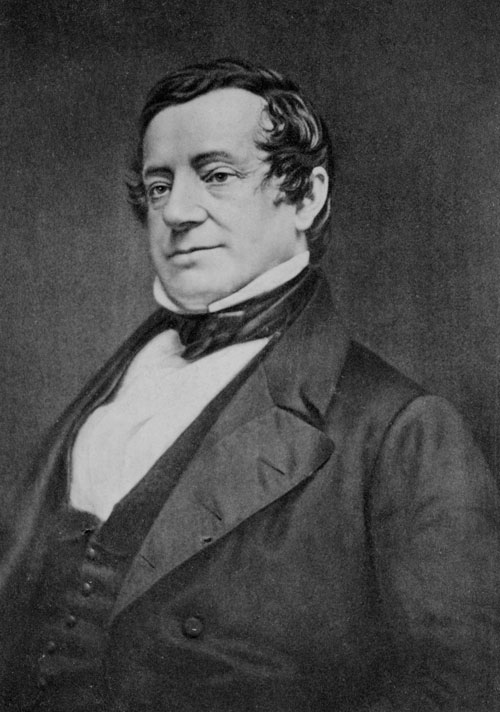
12_Irving-WashingtonIrvington, also known as Irvington-on-Hudson, was named after Washington Irving, the author of The Legend of Sleepy Hollow, who lived at the estate known as Sunnyside, which is now a museum in neighboring Tarrytown. Irvington is an affluent suburban village in the town of Greenburgh in Westchester County, New York, on the eastern bank of the Hudson River, just 20 miles north of midtown Manhattan. To the north of Irvington is the village of Tarrytown, to the south the village of Dobbs Ferry, with route 9 connecting them. By car, it is just minutes from the Tappan Zee Bridge, routes 287, 684, 110, and the Saw Mill River Parkway. Irvington is accessible by public transportation including the Westchester County Beeline Bus System and, most importantly, by Metro-North’s Hudson Line.

The Main Street area is a designated historic district and is also under consideration to be added to the National Register of Historic Places. In 2010, Westchester Magazine ranked Irvington as the Best Place to Live in Westchester.

Primary and secondary schools:
Irvington is part of the Irvington Union Free School District. The schools are Dows Lane School (K-3), Main Street School (4&5), Irvington Middle School (6-8), and Irvington High School (9-12). The Middle School and High School are sited together on a combined campus on Heritage Hill Road off of North Broadway.

The student population of the entire school sytem was around 1,900 in 2013, is known for its small class size and emphasis on academics; and about 98% of graduates go on to higher education.In 2012, the average SAT scores were 571 (reading), 583 (math) and 573 (writing), compared to the statewide averages of 496. 514 and 488, and 74.7 percent of fourth grade students met state standards in English, and 66.1 percent in math, compared to statewide averages of 30.3 and 36.3 percent. In 2015, U.S. News & World Report rated Irvington High School as number 32 in New York State,[41] making it the ninth-best in Westchester.[42]

In the 2009, John Cardinal O’Connor School, a Catholic non-denominational school for students in grades 2 through 8 with learning disabilities, which had formerly been St. Ursula’s Learning Center in Mount Kisco, moved into former The Immaculate Conception School

Religious:
Irvington has four Christian churches. Three of them, the Irvington Presbyterian Church (Presbyterian), the Immaculate Conception Church (Roman Catholic) and The Church of St. Barnabas (Episcopal), are clustered together on Broadway, just north of Main Street. The Calvary Chapel of Westchester (Evangelical) is located in the Trent Building on South Buckhout Street.

The Jewish community of Irvington is served by three nearby synagogues: the traditional/non-denominational Chabad of the Rivertowns, the conservative Greenburgh Hebrew Center in Dobbs Ferry and the dual reform/conservative synagogue Temple Beth Abraham in Tarrytown. Irvington itself features a “chavruah,” or member-led Jewish congregation that follows in the conservative tradition, known as Rosh Pinah Chavruah of the Rivertowns.

Area
• Total     4.0 sq mi (10.5 km2)
• Land     2.8 sq mi (7.2 km2)
• Water     1.2 sq mi (3.2 km2)
Population (2010)
• Total     6,420
• Density     1,600/sq mi (610/km2)
Find out more by visiting Irvington’s official website at: irvingtonny.gov


Excerpted from Wikipedia (https://en.wikipedia.org/wiki/Irvington,_New_York)